
Key details
- Current limitations: Traditional scar treatments (surgery, gels, steroids) are often only partially effective. Even after treatment, scars frequently remain, presenting aesthetic and functional challenges for patients.
- New research: A recent review analyzed data from 11 studies using mesenchymal stem cells (MSCs) or their conditioned medium (growth factors and other molecules secreted by MSCs during laboratory multiplication) for scar treatment. The aim was to determine the effectiveness of the treatment.
- Results: Studies reported significant improvements in scar appearance, as determined by patient and physician satisfaction, as well as reduced thickness and better collagen structure, as determined in animal trials.
- More research is needed: Although results are promising, these are preliminary studies. Larger-scale studies and clinical trials are needed to identify the most effective treatment method, as well as whether allogeneic (donor) or autologous (the patient’s own) stem cells could work better.
Why do scars form and why are they problematic?
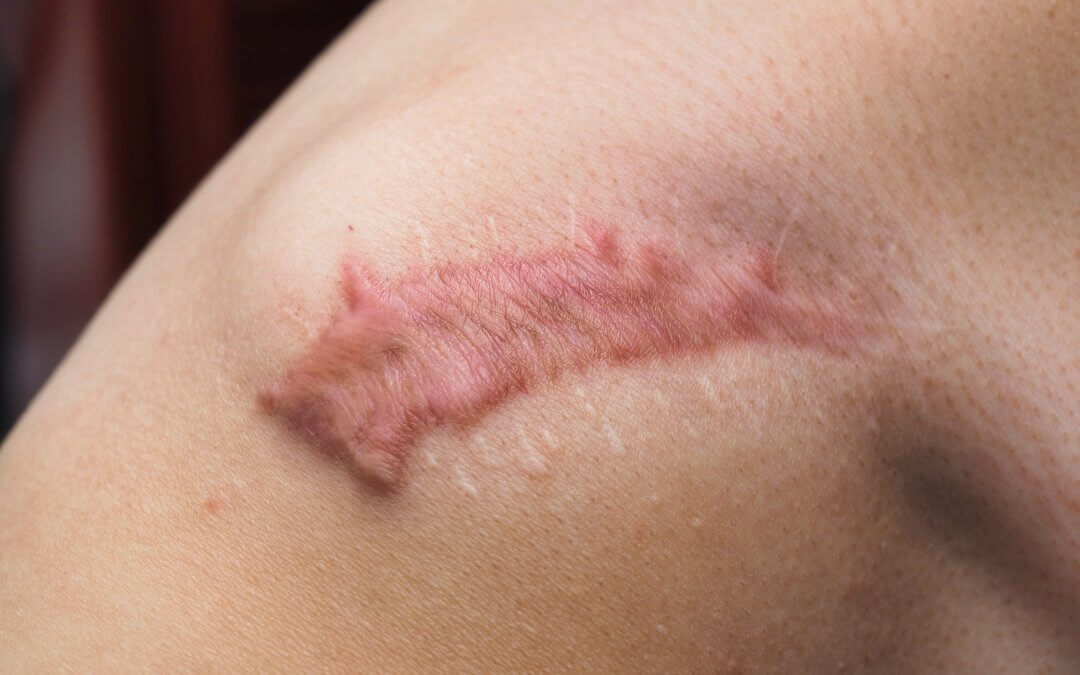
Scars are a natural part of the healing process, and nearly everyone will develop at least one scar over their lifetime. While most scars fade over time and become almost unnoticeable without causing issues, some develop abnormally.
The appearance of a scar depends on factors including:
- The cause, size, location and severity of the original wound.
- Any treatment received for the wound.
- Patient age, genetics and health.[1]
For some, scars can cause significant distress, impeding normal movement or creating aesthetic issues.
What are the different types of severe scars?
Scars that develop abnormally can be categorised into four main types, each presenting unique functional or aesthetic challenges:[1][2]
- Atrophic (depressed) scars: These scars have a sunken, pitted appearance. They usually result from conditions like acne or chickenpox.
- Hypertrophic (raised) scars: These scars have a raised, thickened appearance. They do not grow beyond the original wound area, but can make it uncomfortable or difficult to move. They usually flatten and fade over time.
- Keloid scars: These are raised, hard, and smooth scars that grow and spread beyond the original wound area. They can affect movement, especially near joints, and are more common in specific ethnicities, including south Asian, Chinese, African Caribbean or Black African.[3]
- Contracture scars: These scars often develop after a burn and cause the skin to tighten. They can make it difficult or painful to move, particularly if they affect muscles and nerves or are located over a joint.
What are the current treatment options for scarring?
Treatment options for scars can be both surgical and non-surgical, and can vary depending on the type of scar. Options range from pressure garments, silicone dressings or gels, and steroids, to procedures like laser treatment, cryotherapy to freeze the scar, dermabrasion (removing the top layers of the scarred skin), and scar remodeling or revision surgery.[1][2][3][4]
However, these treatments are often only partially effective. Patients may need to combine multiple of them to get the best result for their individual situation, creating a critical need for more effective, minimally invasive solutions.[5][6]
How can regenerative medicine and MSCs help treat scars?
Regenerative medicine is exploring how mesenchymal stem cells (MSCs) can improve scar outcomes. A recently published review article analyzed data from 11 studies – two on human scar tissues and nine animal studies – to evaluate the efficacy of MSCs.
The studies used two main approaches:
- MSCs: Using the stem cells themselves.
- Conditioned medium: Using the growth factors and other molecules secreted by MSCs during laboratory multiplication; this has also been shown to have potential in regenerative medicine.[7]
The method of administration and the source of the stem cells varied, although most studies used stem cells derived from fat (adipose). All studies compared the effects of the treatment against a control group.[6]
What did the studies find?
According to the review authors, results were consistently positive across the board. Key findings included:
- Visual improvements: All seven studies reporting on the visual appearance of scarring found improvements.
- Patient satisfaction: the two in-human clinical trials, one on atrophic acne scars and one on stretch marks, reported higher patient and physician assessed satisfaction rates compared to control groups.
- Structural changes: Eight studies objectively assessed scar thickness, volume and weight. They all found objective improvements compared to the control groups, validating the visual findings.
Are stem cell scar treatments available now?
While the initial results are promising, these are early preliminary studies. The authors of the review note that the studies varied significantly in scar type, treatment method and stem cell source, and were limited by short follow-up periods.
Researchers are also still determining whether allogeneic (donor) or autologous (the patient’s own) stem cells would be most effective. Because scar types vary so widely, different scars may require different treatment protocols or cell sources.
Access to future treatments may hinge on having access to various sources of stem cells. Preserving stem cells from cord blood, which are available only in the first minutes after birth, could mean your child may have access to these potential therapies. To learn how you could preserve their umbilical cord stem cells, fill in the form below to request our free info kit.
References
[2] NHS (2019). Scars – Overview. https://www.nhs.uk/conditions/Scars/
[3] NHS (2022). Keloid scars. https://www.nhs.uk/conditions/keloid-scars/
FIND OUT MORE, REQUEST YOUR FREE INFO KIT TODAY
All you need to know to make an informed decision.
Provide your contact details to request:
– Complete Info Kit and your Guide to Cord Blood Banking
– Information via email
– Contact from our specialist advisors