

However, stem cell therapy may help provide footballers with longevity, and as research into regenerative medicine has progressed and diversified, there are growing numbers of high-profile athletes opting for private or experimental stem cell treatment to remedy their sports injuries.
Could Stem Cells Help Heal Sports Injuries to the Hamstring?
A study that looked at the potential of regenerative therapies, including stem cells, to treat tendon injuries states that they are an “attractive option” as utilising the “body’s intrinsic potential to repair and heal damaged tissues” often results in a whole and long-lasting repair. [1]
Stem Cells A Future Therapy For Broken Foot Bones?
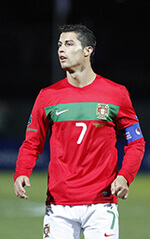
In recent years there have been several high-profile footballers who have sustained metatarsal sports injuries – who could forget David Beckham’s broken metatarsal, which put his 2002 world cup in doubt?
The fifth metatarsal bone is the bone on the outside of the foot which connects to the little toe. If this bone becomes broken close to the ankle then healing can be problematic as the area has low blood flow. [2]
Stem cells may hold the answer to healing such bone fractures, as indicated by several clinical studies.[3]

Meniscal Tears Mended With Stem Cells?
Knee injuries are common amongst football players, due to strain placed upon the joint during exercise.
Footballers who have suffered sports injuries to the knee include Alan Shearer, Christiano Ronaldo, and Paul Gascoigne. Recently, even controversial footballer Louis Suarez has undergone surgery to remove a damaged meniscus within the joint.
Treatment of cartilage injuries in the knee often involves surgery called microfracture. This is where multiple tiny fractures are created near to the damaged cartilage after any calcified fragments have been removed.
These fractures allow the release of blood and bone marrow, which helps create a repair. [4]
Microfracture surgery is often the first choice for treat cartilage damage in the knee. However, a study found that whilst there is improved knee function for the first 2 years, there was insufficient information to determine the long term efficacy of the procedure.[5]
A surgical technique being developed at University Hospital Southampton may improve the outcome for these patients. A technique known as “Abicus” uses microfracture surgery followed by the use of a special glue-like substance made from the patient’s stem cells and hyaluronic acid. This is placed over the affected area and allowed to set. The whole procedure lasts just 30 minutes and could potentially offer a solution for an often terminal footballing injury.[6]
Common Sports Injuries Don’t Need To End Careers
The days where a sports career comes to an end because of an injury may be drawing to a close as advancements in medicine and stem cell research identify novel treatments for a range of problems. Of course, it’s not just professional athletes who will benefit – should clinical trials succeed, these stem cell therapies could become available to everyone who needs them.
- http://www.ncbi.nlm.nih.gov/pmc/articles/PMC4519231/
- https://www.nlm.nih.gov/medlineplus/ency/patientinstructions/000571.htm
- https://cells4life.com/clinical-update/
- https://en.wikipedia.org/wiki/Microfracture_surgery
- http://www.ncbi.nlm.nih.gov/pubmed/19251676
- http://www.dailymail.co.uk/health/article-2702703/New-knee-op-using-stem-cells-stop-arthritis-extend-sporting-careers.html

FIND OUT MORE, REQUEST YOUR WELCOME PACK TODAY
Everything you need to decide about cord blood banking – and, while you decide, Antenatal by Cells4Life: 18 online classes with Cass McNamara, BBC Scotland’s Ask the Midwife, on birth, feeding, newborn care and recovery. It’s free when you request your welcome pack.
Provide your contact details to request:
- Complete Welcome Pack and Parent’s Guide
- Your discount
- save £300
on cord blood banking
- Information via email
- Free access to our full 18-class online antenatal course, including a video class on cord blood banking
- A call from one of our specialist advisers