
Key details
- Current limitations: Traditional scar treatments (such as surgery, silicone gels, corticosteroids, and laser therapy) can improve appearance and symptoms but are often only partially effective, and no gold-standard treatment exists for symptomatic scars.[1][2][3]
- New research: Recent preclinical and early clinical studies have investigated mesenchymal stromal/stem cells (MSCs) or their conditioned medium (the bioactive molecules they secrete) for scar treatment.[4]
- Results: Across studies, MSC-based therapies were associated with improved scar appearance, reduced thickness or volume, and more organised collagen structure. Most evidence comes from animal models, and results vary depending on cell source and delivery method.[4]
- More research is needed: Studies were generally small, short-term, and not consistent with each other in terms of methods. Larger, well-designed clinical trials are needed to determine optimal protocols, long-term safety, and whether autologous (patient-derived) or allogeneic (donor-derived) MSCs are most effective.[4]
Why do scars form and why are they problematic?
Scars form as part of the body’s natural healing process. When tissue is damaged, specialised cells called fibroblasts deposit collagen to repair the skin.[1][2][3]
- In normal healing, the build-up of collagen and scar tissue gradually fades over time.
- In abnormal scarring, persistent inflammation and uncontrolled fibroblast activity cause the deposit of too much collagen, resulting in thick, stiffened tissue (fibrosis).[4]
Some scars fade naturally, but others can cause:
- Pain or itching
- Limited movement, especially over joints
- Psychological or cosmetic concerns
Factors influencing scar severity include:
- Wound depth, size, and location
- Timing and type of treatment
- Patient-specific factors like age, genetics, and overall health[1][2][3]
What are the different types of severe scars?
Abnormal scars are typically categorised into four main types:[1-3]
- Atrophic scars: Sunken scars, often from acne or chickenpox
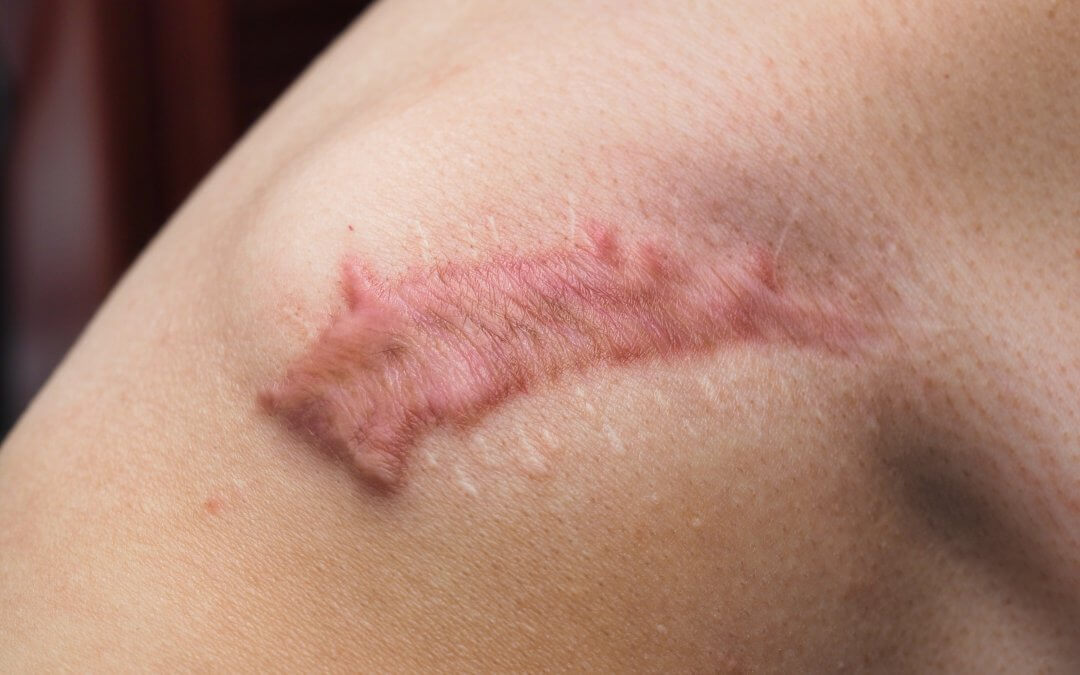
- Hypertrophic scars: Raised scars confined to the wound
- Keloid scars: Raised scars extending beyond the wound that may grow with time
- Contracture scars: Often result from burns; tighten skin and restrict movement
Understanding scar type is important when considering MSC therapies, as different mechanisms drive each type.[4]
What are the current treatment options for scarring?
Current options include:
- Silicone gels or dressings
- Corticosteroid injections
- Laser therapy
- Cryotherapy (freezing the scar)
- Dermabrasion (removing the top layers of the scarred skin)
- Surgical revision or remodelling of the scar
Limitations:
- Outcomes are often incomplete or temporary
- Recurrence is common, especially in keloids
- Multiple combined treatments are frequently required [1][2][3]
This highlights the need for regenerative approaches targeting the biological processes of scarring.[4]
How can regenerative medicine and MSCs help treat scars?
MSCs are multipotent cells derived from:
- Adipose (fat) tissue
- Bone marrow
- Umbilical cord
Evidence suggests MSCs act mainly by releasing chemical signals that affect other cells, rather than by replacing affected tissue themselves.
Proposed mechanisms:
- Reducing inflammation
- Modulating immune responses
- Regulating fibroblast activity
- Improving collagen deposition and extracellular matrix (ECM) remodelling
- Promoting angiogenesis (new blood vessel formation)[4][5]
Therapeutic approaches:
- MSC therapy: Direct injection or topical application of cells
- Conditioned medium (CM) / extracellular vesicles (EVs): Cell-free therapy using MSC-secreted factors
Advantages of CM/EV approaches:
- May be easier standardisation
- May have lower immunogenic risk
- Avoids need for live cell transplantation[5]
What did the studies find?
Overview:
- 11 studies total: mostly preclinical (animal models or human scar xenografts)
- MSC sources: adipose, bone marrow, umbilical cord
- Delivery methods: injection, topical, microneedling-assisted[4]
Key findings:
- Visual appearance:
- Several studies reported improved scar appearance
- Human studies showed increased patient and physician satisfaction
- Assessment methods were variable and partly subjective [4]
- Scar thickness and volume:
- Most studies showed reduced thickness, weight, or volume
- Combination therapies sometimes more effective than MSCs alone [4]
- Collagen structure and fibrosis:
- More organised collagen fibres
- Reduced dense, disordered collagen
- Shift toward less fibrotic ECM [4]
- Inflammation and immune effects:
- Several studies reported reduced markers of inflammation
- Effects varied with timing and scar stage [4]
Are stem cell scar treatments available now?
While initial results are promising, these are early studies. The studies varied in scar type, treatment method, and stem cell source, and had short follow-up periods. Researchers are still determining whether allogeneic (donor) or autologous (patient’s own) stem cells are most effective. Different scars may require different treatment protocols or cell sources.
To learn more about the umbilical cord, a rich source of stem cells, and how you could preserve these cells for your baby’s potential future use, fill in the form below to request our free welcome pack.
References
[2] NHS (2019). Scars – Overview. https://www.nhs.uk/conditions/Scars/
[5] Kang Y, Yang Y, Yao B, Zhang Z, Ji X. Scar Inhibition in Wound Healing: Mechanisms, Design, and Recent Advances. Exploration (Beijing). 2026 Feb 17;6(1):20240517. doi: 10.1002/EXP.20240517. PMCID: PMC12970273 PMID: 41810075

FIND OUT MORE, REQUEST YOUR WELCOME PACK TODAY
Everything you need to decide about cord blood banking – and, while you decide, Antenatal by Cells4Life: 18 online classes with Cass McNamara, BBC Scotland’s Ask the Midwife, on birth, feeding, newborn care and recovery. It’s free when you request your welcome pack.
Provide your contact details to request:
- Complete Welcome Pack and Parent’s Guide
- Your discount
- save £300
on cord blood banking
- Information via email
- Free access to our full 18-class online antenatal course, including a video class on cord blood banking
- A call from one of our specialist advisers
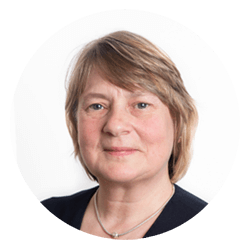
Lesley-Ann Martin, PhD
Chief Scientific Officer at Cells4Life
Dr. Martin holds a PhD in Molecular Biology from the University of Reading and has extensive research experience at the Institute of Cancer Research. She oversees all scientific and laboratory operations at Cells4Life.