
Earlier this year, in a clinical trial, doctors at Florida Children’s Hospital treated children with their own stem cell samples, with almost half of the treated children experiencing significant improvements in their auditory abilities.
The trial specially focused on sensorineural hearing loss, which accounts for 90% of hearing loss worldwide.
In the UK…
- 11 million people suffer from hearing loss
- By 2035, this will be around 15.6 million people
- 50,000 kids with hearing loss
- 900,000 have severe or profound hearing loss
- 1 in 10 have tinnitus
- Hearing loss occurs in 5 out of every 1,000 newborns
What is Sensorineural hearing loss (SNHL)?
Sensorineural hearing loss is a type of deafness caused by damage to hair cells in the organ of Corti, located within the cochlea.
These inner, outer and structural hair cells are needed within this organ to help us hear and transform sound waves into electrical impulses transmitted to the brain.
However, these hairs are post-mitotic, which means they do not have the ability to regrow once the foetus has finished developing. When damage occurs, the organ is therefore unable to regenerate.
23-50% of SNHL cases are genetic; the majority are acquired. This can be due to premature birth, infections, exposure to loud noises or ototoxic drugs (drugs which damage the ear).
How is SNHL currently treated?
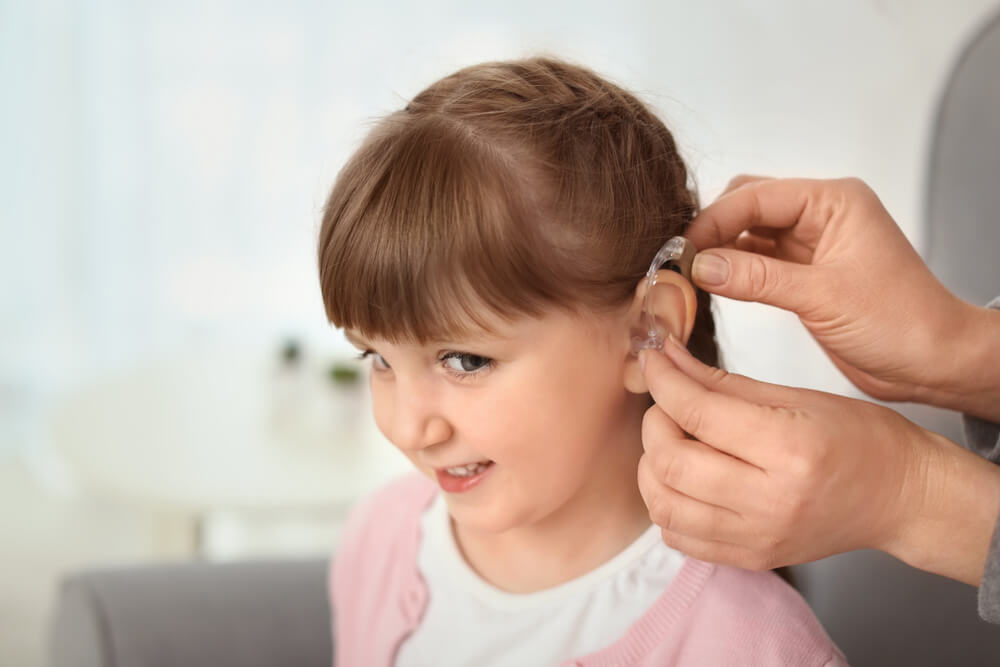
Treatment cannot repair the lost hair cells. Instead, most sufferers will be prescribed hearing aids and cochlear implants to compensate for damage to their hearing.
What did the trial involve?
11 children aged between 6 months and 6 years were enlisted for the study, which saw doctors administer intravenous autologous cord blood infusions.
Dosage varied for each patient, between 8 and 30 million cells per kilo of body weight.
Could stem cells treat hearing loss?
Most clinical trials have focused on stem cells derived from the bone marrow. This was the first study to instead use autologous umbilical cord blood.
In the trial, five patients (45%) experienced a reduction in auditory brainstem response thresholds. A lower threshold means that the brain is capable of responding to quieter sounds, and a reduction therefore signifies improved hearing ability.
The data also showed that stem cell infusions caused the progressive myelination of auditory pathways. Myelination is the process of coating the axon of each neuron so that it conducts signals more effectively.
Thought the study is in very early stages, it highlights the potential of stem cells for the 466 million people worldwide suffering from hearing loss. In the future, stem cells may help a child to hear for the first time or an adult to regain their senses.

FIND OUT MORE, REQUEST YOUR WELCOME PACK TODAY
Everything you need to decide about cord blood banking – and, while you decide, Antenatal by Cells4Life: 18 online classes with Cass McNamara, BBC Scotland’s Ask the Midwife, on birth, feeding, newborn care and recovery. It’s free when you request your welcome pack.
Provide your contact details to request:
- Complete Welcome Pack and Parent’s Guide
- Your discount
- save up to £500
on cord blood banking
- Information via email
- Free access to our full 18-class online antenatal course, including a video class on cord blood banking
- A call from one of our specialist advisers