
Key details
The condition: Osteoarthritis affects around nine million people in the UK, and the knee is one of the joints most commonly affected – around one in five adults over 45 in England has knee osteoarthritis [1]. There is no cure, and current treatment manages symptoms rather than repairing the joint [2].
The therapy: Cartistem is made from mesenchymal stem cells derived from donated umbilical cord blood, combined with a hyaluronic acid gel and applied surgically to damaged cartilage. It has been approved in South Korea since 2012, where more than 36,000 patients have been treated [3].
The news: The first US patient has now been treated in a pivotal phase 3 trial – a randomised, double-blind study of around 300 people that could take the therapy towards US approval [3, 4].
The caveat: In the pivotal Korean trial, cartilage repair was clearly better than comparison surgery at one year, but the difference in pain and function emerged over longer follow-up [5].
What Is Knee Osteoarthritis, And How Is It Treated Now?
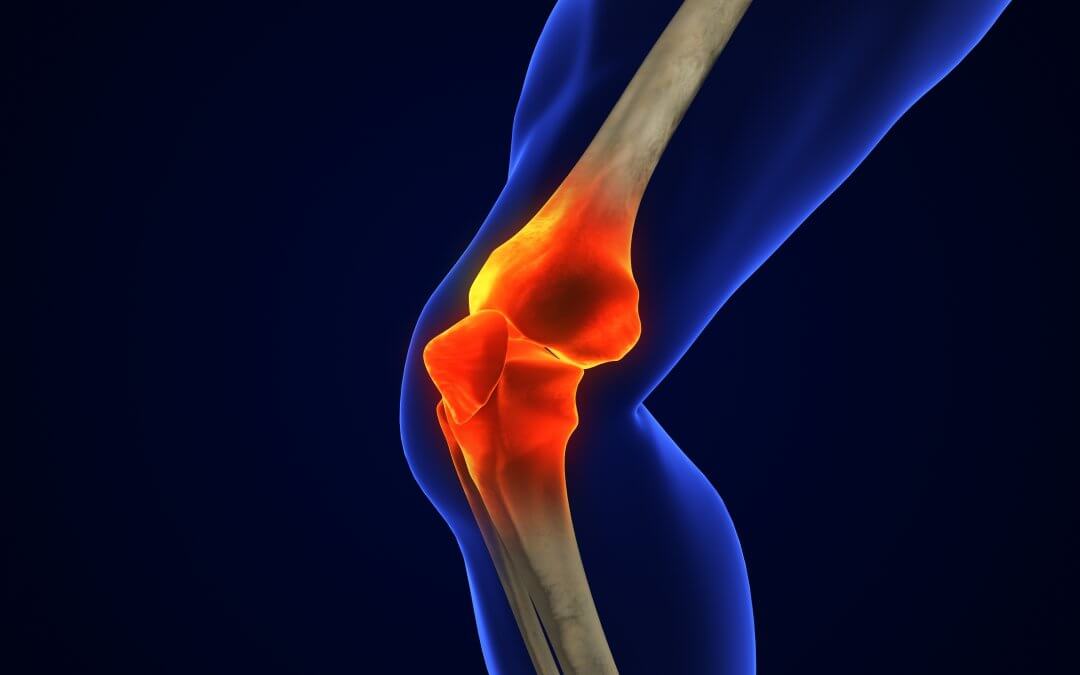
Osteoarthritis is the most common form of arthritis. In the knee, the smooth cartilage that cushions the joint gradually breaks down, causing pain, stiffness, and reduced mobility. Around one in five adults over 45 in England lives with knee osteoarthritis [1]. There is currently no treatment that reverses the damage: the NHS recommends exercise, weight management, and painkillers, with steroid injections for flare-ups and knee replacement surgery for advanced disease [2].
What Is Cartistem?
Cartistem, developed by the South Korean company MEDIPOST, is one of the world’s longest-established stem cell medicines. Each dose contains around 7.5 million mesenchymal stem cells derived from donated umbilical cord blood, mixed into a hyaluronic acid gel [3, 4]. It is not a simple injection: during a knee operation, the surgeon prepares the damaged area of cartilage and applies the cell and gel mixture directly into the defect [4, 5].
Cartistem was approved in South Korea in 2012, and MEDIPOST reports that more than 36,000 patients have since been treated there. A phase 3 trial has also been completed in Japan, and the US regulator has agreed that a single US pivotal trial, supported by the Korean and Japanese evidence, can form the basis of an application for US approval [3].
What Did The Korean Trial Show?
In the pivotal Korean trial, published in full in 2021, 114 patients with large, full-thickness cartilage defects were randomised to Cartistem or to microfracture, a standard surgical technique that stimulates repair by making small holes in the bone beneath the cartilage [5]. A year after surgery, the researchers looked directly inside the knee: 97.7% of Cartistem-treated knees showed improved cartilage regeneration grades, compared with 71.7% after microfracture [5].
Pain and function scores, however, were similar between the groups at one year. The difference in symptoms appeared over the following three to five years of follow-up, during which the Cartistem group maintained greater improvement – although this longer-term comparison was observational rather than randomised [5]. An earlier study of the first patients treated reported improvements that lasted through seven years of follow-up, with no safety concerns [6].
What Is The Us Trial Testing?
The new US trial is a randomised, double-blind, phase 3 study that plans to enrol around 300 adults aged 18 to 75 with symptomatic knee osteoarthritis of moderate severity on X-ray and clinically relevant cartilage defects [4]. Every participant undergoes keyhole debridement – the removal of loose, damaged tissue – and half also receive Cartistem. Neither the patients nor the assessors know who received the cells [4].
The two primary endpoints are change in knee pain and knee function at 24 months, and MRI scans will explore whether the therapy alters the structural course of the disease [4]. The first patient was treated in July 2026 at a centre in Colorado, and the trial is now recruiting at around 29 sites across the United States, including the Mayo Clinic [3, 4].
How Does This Fit The Wider Evidence?
Cell therapy for knee osteoarthritis has had mixed results. In 2023, a 480-patient US trial known as MILES found that single injections of three different cell preparations – including umbilical cord tissue cells – were no better than a corticosteroid injection at reducing knee pain after one year [7]. Cartistem is a different proposition: cord blood-derived cells surgically implanted into prepared cartilage defects rather than injected into the joint, with structural repair already demonstrated by direct inspection of the knee [4, 5]. The double-blind US trial is designed to settle the question properly [4].
What Does This Mean For Families Storing Cord Blood?
Cartistem is built from the same broad mesenchymal stem cell family found in the umbilical cord blood and cord tissue that families can store at birth [8]. A cord blood cell therapy reaching a US pivotal trial after 13 years of routine clinical use in South Korea is a measure of how far this field has come – and of why regenerative medicine, not just transplant medicine, is where much of cord blood’s future potential lies [3].
Storing your baby’s cord blood and cord tissue preserves their stem cells at their youngest, and they can only be collected at birth. To learn more about umbilical cord stem cells and how you can preserve them, fill in the form below to request your free welcome pack.
References
- Versus Arthritis (2023). The State of Musculoskeletal Health 2023. https://www.versusarthritis.org/about-arthritis/data-and-statistics/the-state-of-musculoskeletal-health/
- NHS. Osteoarthritis. https://www.nhs.uk/conditions/osteoarthritis/
- MEDIPOST Inc. (2026). MEDIPOST Inc. treats first U.S. participant in Phase III trial of umbilical cord stem cell therapy for symptomatic cartilage defects due to knee osteoarthritis. PR Newswire, 8 July 2026. https://www.prnewswire.com/apac/news-releases/medipost-inc-treats-first-us-participant-in-phase-iii-trial-of-umbilical-cord-stem-cell-therapy-for-symptomatic-cartilage-defects-due-to-knee-osteoarthritis-302820199.html
- ClinicalTrials.gov. Study record NCT07339111: Phase 3 pivotal trial comparing CARTISTEM and surgical comparator for knee cartilage lesions and osteoarthritis. https://clinicaltrials.gov/study/NCT07339111
- Lim, H.-C., Park, Y.-B., Ha, C.-W., et al. (2021). Allogeneic umbilical cord blood-derived mesenchymal stem cell implantation versus microfracture for large, full-thickness cartilage defects in older patients: A multicenter randomized clinical trial and extended 5-year clinical follow-up. Orthopaedic Journal of Sports Medicine, 9(1). https://doi.org/10.1177/2325967120973052
- Park, Y.-B., Ha, C.-W., Lee, C.-H., et al. (2017). Cartilage regeneration in osteoarthritic patients by a composite of allogeneic umbilical cord blood-derived mesenchymal stem cells and hyaluronate hydrogel: Results from a clinical trial for safety and proof-of-concept with 7 years of extended follow-up. Stem Cells Translational Medicine, 6(2), 613–621. https://doi.org/10.5966/sctm.2016-0157
- Mautner, K., Gottschalk, M., Boden, S. D., et al. (2023). Cell-based versus corticosteroid injections for knee pain in osteoarthritis: a randomized phase 3 trial. Nature Medicine, 29, 3120–3126. https://doi.org/10.1038/s41591-023-02632-w
- Nagamura-Inoue, T., & He, H. (2014). Umbilical cord-derived mesenchymal stem cells: Their advantages and potential clinical utility. World Journal of Stem Cells, 6(2), 195–202. https://doi.org/10.4252/wjsc.v6.i2.195

FIND OUT MORE, REQUEST YOUR WELCOME PACK TODAY
Everything you need to decide about cord blood banking – and, while you decide, Antenatal by Cells4Life: 18 online classes with Cass McNamara, BBC Scotland’s Ask the Midwife, on birth, feeding, newborn care and recovery. It’s free when you request your welcome pack.
Provide your contact details to request:
- Complete Welcome Pack and Parent’s Guide
- Your discount
- save up to £500
on cord blood banking
- Information via email
- Free access to our full 18-class online antenatal course, including a video class on cord blood banking
- A call from one of our specialist advisers